

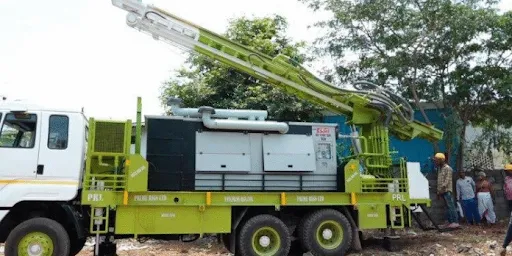
Water well drilling requires equipment matched to geological conditions, required bore diameter, drilling depth, and project scale. The drilling method also affects productivity, operating costs, and the type of tooling required. A suitable borewell rig machine can provide the mechanical capability needed for consistent borehole construction across agricultural, drinking-water, and industrial applications.
Modern drilling equipment can combine rotary and down-the-hole hammer methods, allowing contractors to approach different formations with greater flexibility. Selection therefore depends on more than horsepower or machine size. The complete drilling arrangement, including flushing method, carrier, compressor, and support equipment, should match the intended application.
Understanding Water Well Drilling Requirements
Water well projects can encounter hard rock, unconsolidated soil, alluvial formations, and other geological conditions. Rotary drilling can be effective in softer formations, while down-the-hole hammer systems are commonly suited to harder rock. Equipment selection should reflect the expected ground profile before drilling begins.
Bore diameter and required depth also influence rig specifications. Contractors should evaluate drilling capacity, available torque, air requirements, hydraulic performance, and mobility. A properly matched machine can help maintain productive drilling cycles while reducing unnecessary strain on major components.
Comparing Drilling Methods and Rig Configurations
Different drilling methods provide distinct operating advantages. Mud rotary systems use circulating drilling fluid, while DTH systems use compressed air to operate a hammer at the bottom of the borehole. Some rigs combine DTH and rotary capabilities, allowing contractors to adapt the method to changing ground conditions.
Rig configuration affects accessibility and deployment. Truck-mounted models can provide mobility between sites, while crawler or tractor-mounted equipment may suit specific terrain and project requirements. Portable rigs can offer another option where transportation and restricted access are important considerations.
Key Specifications for Equipment Selection
A drilling machine should be evaluated through measurable specifications rather than appearance alone. Important considerations include:
● Maximum drilling diameter and depth
● DTH and rotary drilling capability
● Hydraulic operating pressure
● Compressor capacity and rated pressure
● Carrier configuration and mobility
● Suitable drilling formations
● Availability of tooling and replacement parts
Compressor performance is particularly important for DTH drilling because adequate air volume and pressure are required for effective hammer operation. Hydraulic capacity also influences movement, rotation, and other rig functions. Reviewing these specifications against project requirements helps contractors select equipment with appropriate operating capability.
Final Thoughts
What should contractors consider before investing in drilling equipment? The strongest decision comes from matching machine capability with geology, borehole dimensions, drilling method, mobility requirements, and long-term operating needs. An experienced drill machine manufacturer can help evaluate these factors and identify equipment suited to the project’s technical demands.
Prime Rigs manufactures and exports drilling rigs for water wells, mining, construction, geological applications, core drilling, and earthing. Its product portfolio includes water well, rotary, core, portable, special, and refurbished drilling rigs, with equipment designed for different formations and project requirements. The company also supports customers through tooling, parts, technical instruction, and after-sales assistance, creating a broader equipment solution for professional drilling operations.
