

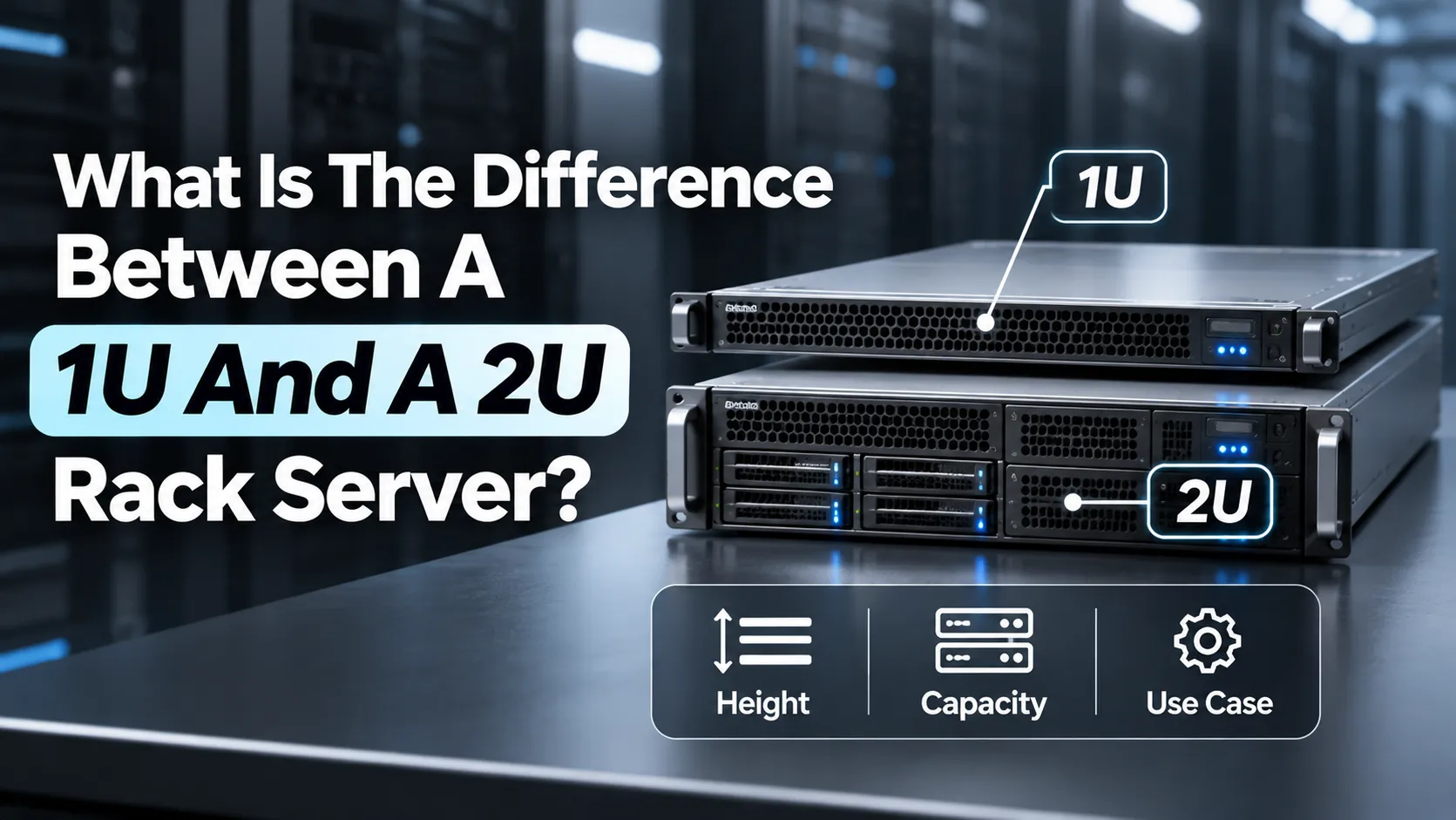
A 1U rack server measures 1.75 inches (44.45 mm) in height, while a 2U rack server measures 3.5 inches (88.9 mm).
Both fit into standard server racks, but a 2U server occupies twice the vertical space. Its larger chassis can accommodate more storage drives, expansion cards, and cooling components, depending on the model.
A 1U rack server is ideal for businesses that want to maximize rack space and deploy more servers in a limited area. A 2U rack server is better suited to configurations that require additional storage, hardware expansion, or greater cooling flexibility. The right choice depends on your workload, performance requirements, available rack space, and future expansion plans.
What Are the Key Differences Between 1U and 2U Rack Servers?
The primary difference is height, but chassis size also affects storage capacity, cooling options, hardware expansion, and server density.
|
Feature |
1U Rack Server |
2U Rack Server |
|
Height |
1.75 inches (44.45 mm) |
3.5 inches (88.9 mm) |
|
Rack space |
1 rack unit |
2 rack units |
|
Server density |
Higher potential density |
Lower potential density |
|
Storage capacity |
Often fewer internal drive bays |
Often more internal drive bays |
|
Expansion |
More limited in many configurations |
Generally offers more expansion options |
|
Cooling |
Compact airflow design |
More room for cooling components |
|
Best suited for |
Web hosting and general computing |
Storage-intensive and expansion-heavy workloads |
Actual specifications vary by model. A 1U server can outperform a 2U server when its processors, memory, and other components better match the intended workload.
What Is a 1U Rack Server?
A 1U rack server is a compact server that occupies 1.75 inches of vertical rack space. Its small form factor allows businesses to deploy more servers within a limited data center footprint. For instance, Lenovo rack servers offer options businesses can evaluate when building space-efficient infrastructure for web hosting, business applications, and virtualization.
What Are the Benefits of a 1U Server?
-
Higher rack density: Install more servers within the available vertical space.
-
Space efficiency: Make better use of limited data center capacity.
-
Flexible deployment: Run web applications, business software, and virtualization workloads.
-
Scalable infrastructure: Add computing capacity without immediately expanding rack space.
However, the smaller chassis can limit internal drive bays, expansion cards, and cooling options. Compact designs may also require high-speed fans to maintain sufficient airflow. Businesses should check supported configurations before selecting hardware for demanding workloads.
What Is a 2U Rack Server?
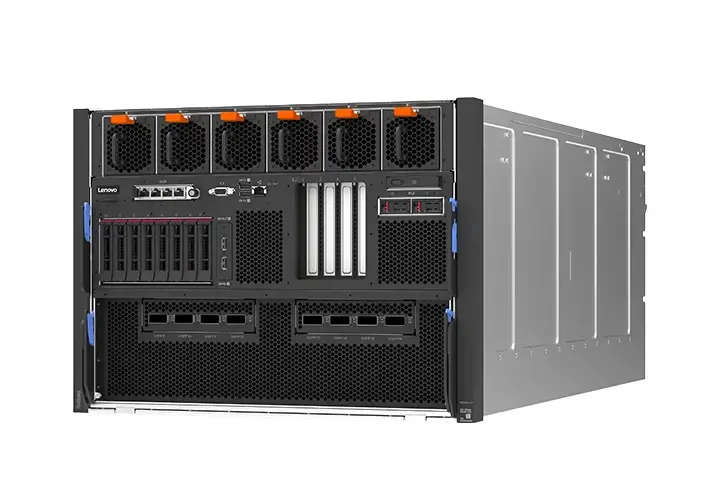
A 2U rack server occupies two rack units, measuring 3.5 inches in height. Its larger chassis provides additional room for storage drives, expansion cards, and cooling hardware, depending on the model.
What Are the Benefits of a 2U Server?
-
Greater expansion flexibility: Support additional compatible PCIe cards and networking hardware.
-
More storage options: Accommodate more internal drives in suitable configurations.
-
Cooling flexibility: Provide room for larger or additional cooling components where supported.
-
Workload versatility: Support applications requiring substantial memory, storage, or specialized hardware.
The main trade-off is rack density. A 2U server occupies twice the vertical space of a 1U server, so fewer units fit into the same rack.
When Should You Choose a 1U or 2U Rack Server?
Your choice should reflect the applications you run and the hardware they require.
Choose a 1U rack server if you need to maximize rack density, run web applications, host lightweight services, or support workloads with predictable CPU and memory requirements. It is also a practical option when internal expansion requirements are limited.
Choose a 2U rack server if your workloads require more internal storage, additional expansion cards, specialized hardware, or greater configuration flexibility. It can be particularly suitable for storage-intensive databases, virtualization environments, and applications that need multiple expansion devices.
For example, a hosting provider may use 1U servers to accommodate more computing nodes in a rack. A business running a database with multiple storage drives may prefer a 2U configuration.
How Do 1U and 2U Servers Affect Rack Space and Cooling?
Rack space is measured in rack units (U). A standard 42U rack provides 42 units of vertical mounting space, although other equipment also needs room.
In theory, a 42U rack can hold 42 1U servers or 21 2U servers. Actual capacity depends on the space required for network switches, power distribution units, cable management, and other equipment.
Cooling is another important consideration when choosing a rack server. A 1U server has less internal space and may rely on smaller, faster-spinning fans to maintain airflow, while a 2U server can accommodate larger cooling components in supported configurations. For instance, Lenovo offers rack servers in different form factors to meet varying performance, cooling, and workload requirements.
Before deployment, check power consumption, airflow requirements, operating temperatures, and the rack’s cooling capacity. Both server types must have sufficient airflow to prevent overheating.
How Do You Choose the Right Rack Server?
Choose a server based on its intended workload rather than its physical size alone.
Consider these factors before making a decision:
-
Processor performance: Check CPU specifications against your applications’ computing requirements.
-
Memory capacity: Ensure sufficient RAM for databases, virtualization, and business applications.
-
Storage requirements: Compare drive bays, supported drive types, and storage expansion options.
-
Expansion capacity: Confirm the number and type of PCIe slots required for networking or accelerator cards.
-
Power and cooling: Verify that your infrastructure can support the server’s power consumption and heat output.
-
Future growth: Consider whether you may need additional storage, memory, or hardware in the future.
A 1U server is a practical choice when rack density is the priorit,y and the required configuration fits within a compact chassis. A 2U server is generally preferable when additional storage, expansion options, or cooling flexibility matter more than maximizing the number of servers per rack.
Conclusion
The main difference between a 1U and a 2U rack server is the vertical space each occupies and the hardware configurations its chassis can support. A 1U server measures 1.75 inches tall and helps businesses maximize rack density. A 2U server measures 3.5 inches tall and generally provides more room for storage, expansion cards, and cooling components.
Choose a 1U rack server when space efficiency and server density are your priorities. Choose a 2U rack server when your workloads require additional storage or hardware expansion. Compare processor performance, memory, drive capacity, power requirements, and cooling specifications to select the right configuration for your business.
