

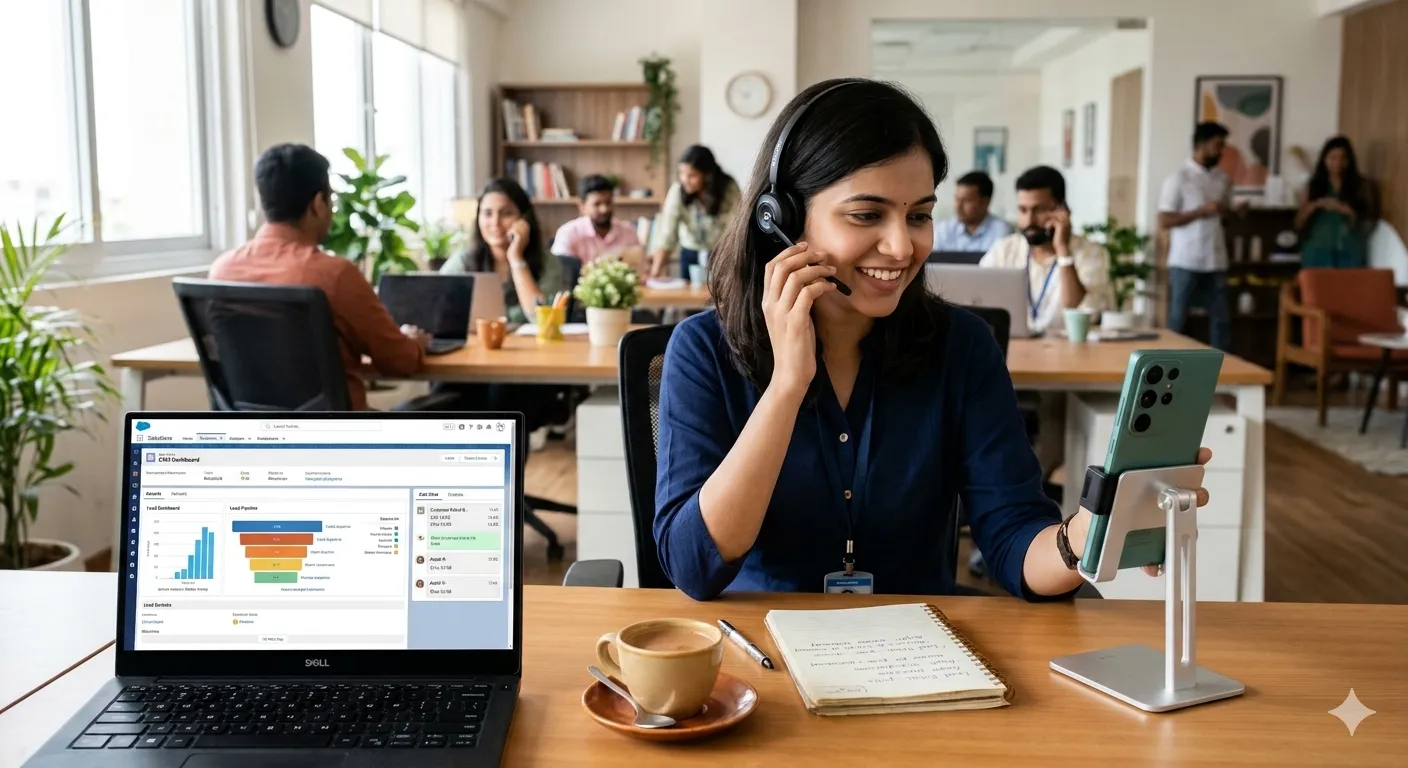
Ask a sales manager in India how customers prefer to hear from them, and the answer is rarely a single channel. A call opens the conversation; a message keeps it alive. That is why buyers researching telecalling software India vendors now ask about messaging as well as dialling, and why telecalling software India is evolving quickly. This article examines the trend, the practical benefits, the risks to avoid and the steps that help a team blend both channels without confusing customers or exhausting agents.
Why Are Phone Calls Not Enough Anymore?
Many buyers screen unknown numbers, and others pick up only when they are free. A call that goes unanswered used to mean a lost lead; now it can mean a polite message follow-up. Customers also like having details in writing, such as prices, brochures and addresses, which are awkward to repeat on a call. Combining channels respects their time and gives agents a second chance to be helpful. The goal is not more noise, but a smoother path to a decision.
What Does a Blended Workflow Look Like?
Picture a simple flow. An agent calls a new lead, records the outcome and sends a template message with details immediately after hanging up. If the customer replies, the contact lands in the same CRM, where the next agent sees the full history. Broadcast messages announce offers or reminders to interested groups. Nothing lives in personal chat apps or scattered notebooks. The workflow works because every touchpoint, spoken or written, feeds one timeline that anyone on the team can read.
How Should Teams Choose the Right Tool?
Choosing a WhatsApp CRM India businesses can rely on starts with the official Business API, since it supports approved templates, bulk messaging and a team inbox without risking personal accounts. Check whether agents can reply from a mobile app, whether automations such as auto replies exist, and how easily conversations convert into trackable leads. Ask about onboarding for the verified number as well. A tool that fits daily habits will be adopted; one that demands heavy training usually gets quietly abandoned.
Which Teams Benefit Most?
Businesses with longer buying cycles gain the most. Education counsellors, property consultants, insurance advisers and finance teams all rely on repeated, trust-building contact. Retail and ecommerce sellers use messages for order updates, reminders and offers. Field teams benefit because they can answer queries from a phone rather than a desk. Smaller companies profit too, since a blended setup lets a few agents appear responsive and organised, which counts for a great deal when customers compare several nearly identical sellers.
What Mistakes Should You Avoid?
The biggest mistake is over-messaging. Customers who receive three broadcasts a day will ignore all of them or block the sender. Respect consent, send only approved templates and avoid contacting people at inconvenient hours. Keep tone consistent between call and chat, so the person does not feel they are dealing with two different companies. Review opt-outs seriously. Trust is easy to lose and slow to rebuild, and a disciplined messaging calendar protects the reputation that your agents work hard to create.
How Do You Measure Success?
Measure the combined funnel, not each channel in isolation. Useful indicators include reply rate to post-call messages, time taken to respond, number of leads that move from chat to a booked meeting and conversions by source. Compare leads contacted by call alone with leads contacted by call plus message over a month. If the blended group performs better, expand it. If not, examine the templates. Evidence keeps the whole strategy grounded and gives managers something concrete to present to owners.
How Do You Roll It Out Smoothly?
Start with a pilot involving a small team and one campaign. Write three or four simple message templates, train agents to send them right after a call and review results after two weeks. Collect feedback from agents, since they will always notice friction first. Then expand gradually to other teams and campaigns. A phased rollout avoids chaos, builds internal champions and gives you real numbers before you commit more budget, which makes the final decision easier to defend to management.
What Comes Next for Sales Conversations?
Voice and chat are no longer rivals; they are partners in the same conversation. Teams that combine them thoughtfully respond faster, follow up better and sound more human. If you are ready to try a mobile-first approach that brings dialling, CRM and official WhatsApp tools together, visit godial.cc and see how a pilot could work for your team. The businesses that learn to move between channels gracefully will be the ones customers remember. Start small and let results guide you.
