

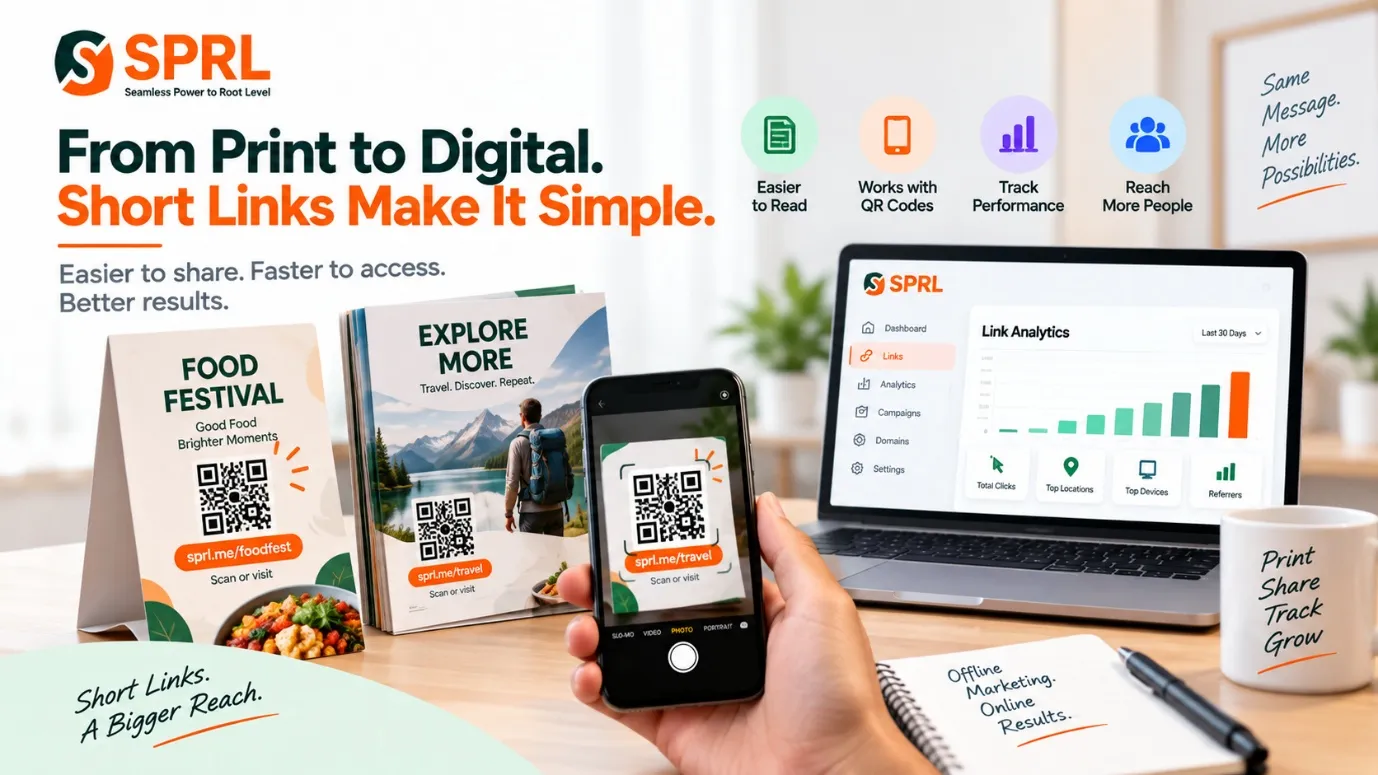
Printed marketing has not disappeared. Posters, brochures, packaging, event cards, menus, and direct mail still send people toward websites, registration pages, product information, and special offers. The challenge is making that move from paper to screen easy.
A URL shortener can replace a long web address with something easier to print, read, and type. This matters when a customer cannot scan a QR code or wants to revisit the destination later from another device.
Readable Links Work as a Useful Backup
QR codes are convenient, but they should not always be the only way to reach a digital destination. A damaged code, poor camera focus, weak lighting, or an older device can make scanning difficult.
Including a short written link next to a QR code gives people another option. It can also make the destination easier to remember when someone sees an advertisement briefly and wants to access it later.
Plan the Destination Before Printing
A digital ad can be edited quickly, but printed material is harder to correct after distribution. Before creating the short link, teams should confirm that the destination page is live, mobile-friendly, and appropriate for the audience.
Campaign dates also need attention. A poster promoting a short-term offer should not continue leading to an expired message months later. Planning the destination and expected campaign lifespan reduces problems after printing.
Keep Printed Links Simple
A printed short URL should be easy to distinguish from surrounding text. Complicated capitalisation, unclear characters, and long aliases can make manual typing difficult, even when the address is shorter than the original.
Meaningful aliases can help when available. A campaign name, event name, or simple product reference may be easier to recognise than a random sequence, especially when the link appears on packaging or signage.
Create Separate Links for Different Materials
Marketers often use the same campaign across flyers, posters, brochures, and in-store displays. Using one link everywhere is simple, but it makes it harder to understand which physical asset is generating interest.
Separate short links can provide cleaner comparisons. A team may create one link for a poster and another for a brochure while sending both to the same landing page. The data can offer extra context about where engagement originated.
Bulk Creation Helps Large Print Runs
Large campaigns may require dozens or hundreds of trackable links for stores, products, events, representatives, or regional materials. Creating each link manually introduces repetitive work and increases the chance of inconsistent naming.
A bulk link generator can make this process easier by producing many links from an organised source list. When the spreadsheet is prepared carefully, teams can keep destinations, labels, and generated links together before they are sent to designers or printers.
Check Every Link Before Production
A link should never go to print without testing. Teams should open each short URL on multiple devices and confirm that it reaches the correct destination, preserves necessary tracking information, and does not trigger an error.
QR codes should also be tested from the final artwork rather than only from a draft. Size, contrast, placement, and print quality can affect scanning, so the complete asset needs a practical check before a large production run.
Use Analytics With the Right Expectations
Short-link analytics can show how often a printed campaign generates clicks and may provide information about devices, locations, or other traffic signals. This can make offline campaigns more observable.
Clicks are not the same as sales or completed enquiries. Marketers should compare link activity with website conversions, registrations, coupon use, or other outcomes before deciding whether one printed asset performed better than another.
Maintain Links After Materials Are Distributed
Printed materials can remain in circulation long after a campaign manager expects. A brochure may sit in an office for months, while packaging or signage can stay visible even longer. This makes link maintenance important.
Teams should periodically check whether important printed links still lead somewhere useful. When the platform and setup allow destination changes, an established short link may sometimes be redirected rather than forcing the business to replace physical assets.
Conclusion
Print-to-digital campaigns work best when customers have a simple route from a physical message to an online destination. Short URLs can complement QR codes, improve readability, support tracking, and provide a backup when scanning is inconvenient.
The strongest workflow begins before anything is printed. Clear destinations, organised link creation, thorough testing, and ongoing maintenance help businesses avoid mistakes while gaining better insight into how offline marketing contributes to digital engagement.
