

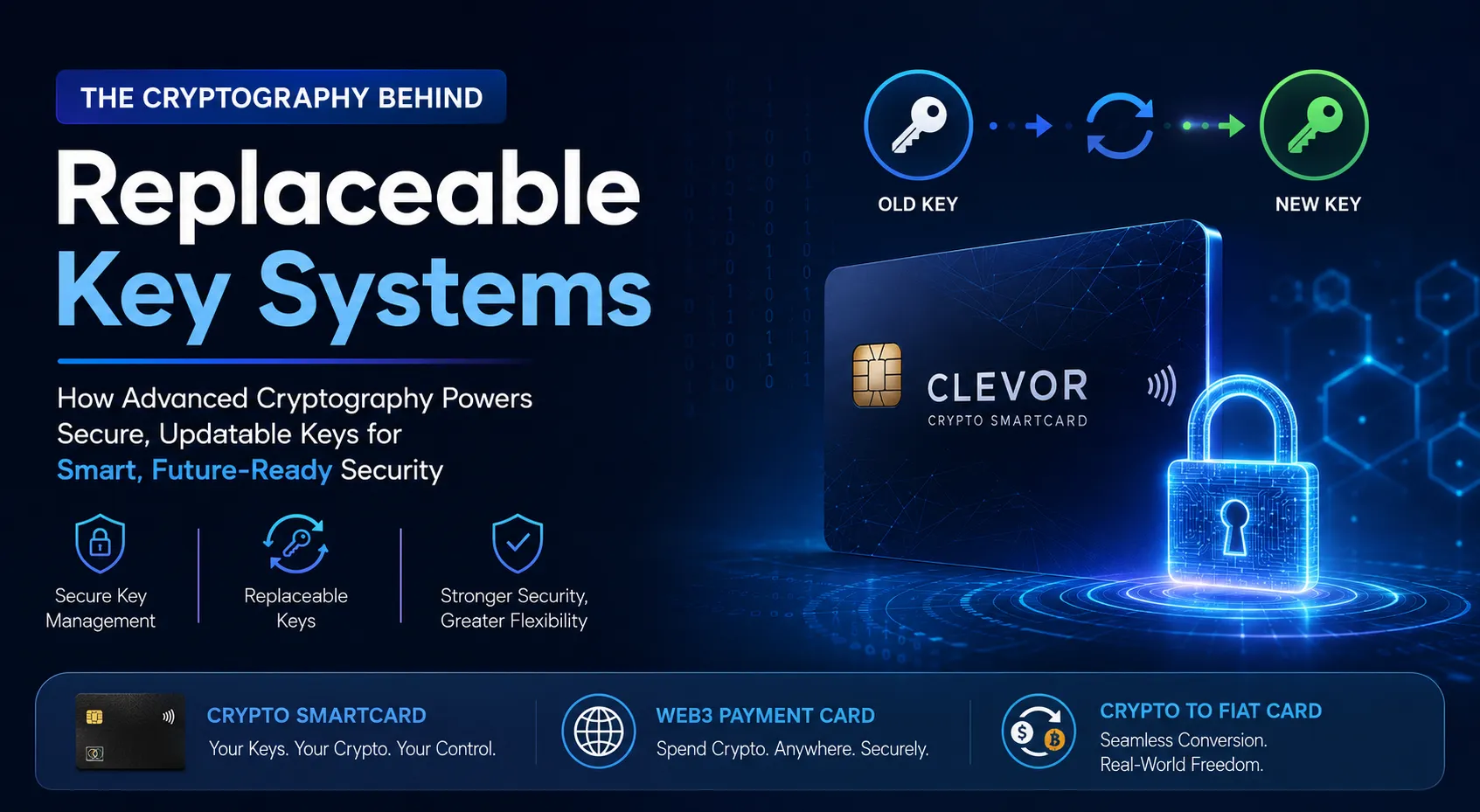
As digital asset ownership expands across Web3, the security of private keys has become more important than ever. Whether users are managing cryptocurrencies, accessing decentralized applications, or making blockchain-based payments, private keys remain the foundation of trust. However, traditional wallets often introduce a significant challenge: what happens if a private key is lost, compromised, or needs to be replaced?
This is where replaceable key systems are changing the landscape. By combining advanced cryptographic techniques with secure hardware, modern solutions such as a Crypto smartcard enable users to maintain strong security while offering greater flexibility in key management. Replaceable key systems provide a practical approach to protecting digital assets without sacrificing usability, making them increasingly relevant for individuals and businesses operating in the Web3 ecosystem.
Understanding Private Keys and Digital Security
Every blockchain transaction relies on cryptographic key pairs consisting of a public key and a private key. The public key serves as an address that can be shared openly, while the private key remains secret and authorizes transactions.
Traditionally, users are responsible for safeguarding these private keys. If a private key is lost, access to associated assets may be permanently lost. If it is stolen, unauthorized parties can gain complete control over those assets.
Modern security solutions such as a Crypto smartcard address these risks by storing private keys within a secure hardware environment designed to prevent extraction and unauthorized access.
What Are Replaceable Key Systems?
A replaceable key system allows users to update, rotate, or replace cryptographic credentials without replacing the physical device itself. This approach introduces greater flexibility while maintaining a high level of security.
Instead of relying on a single static key throughout the lifetime of a device, replaceable key systems support controlled key updates under secure conditions.
Benefits include:
- Improved long-term security
- Reduced impact of compromised credentials
- Easier compliance with evolving security policies
- Enhanced operational flexibility
- Better protection against future cryptographic threats
For organizations managing digital assets at scale, key rotation is already considered a security best practice. Integrating this capability into a Crypto smartcard brings enterprise-grade security principles to individual users.
The Role of Cryptography in Key Replacement
The ability to replace keys securely depends on sophisticated cryptographic mechanisms. Simply generating a new key is not enough; the system must ensure that only authorized users can initiate and complete the replacement process.
Several cryptographic principles make this possible:
Secure Key Generation
Modern hardware security modules generate keys using true random number generators. These generators produce unpredictable values that cannot be recreated or guessed.
A secure Crypto smartcard uses dedicated hardware to generate and store cryptographic credentials within a protected environment.
Digital Signatures
Digital signatures verify the authenticity of key replacement requests. Before a new key can be activated, the system confirms that the request originates from an authorized source.
This verification process prevents attackers from introducing fraudulent keys into the system.
Secure Key Exchange
When replacing credentials, encrypted communication channels ensure that sensitive information cannot be intercepted during transmission.
Advanced cryptographic protocols establish trusted connections between the hardware device and authorized management systems.
Why Replaceable Keys Matter for Web3
The Web3 ecosystem is evolving rapidly, and users increasingly require solutions that balance security with convenience. Traditional wallet models often rely on static credentials and complex recovery procedures.
A Crypto smartcard equipped with replaceable key technology provides a more resilient approach. Users can update credentials when necessary without replacing the entire device or migrating assets to a completely new wallet.
This flexibility is particularly valuable for:
- Long-term cryptocurrency holders
- Enterprise blockchain deployments
- Digital identity management
- Decentralized finance applications
- Secure payment ecosystems
As adoption grows, replaceable key systems are becoming an important component of modern Web3 infrastructure.
Hardware Security and Key Isolation
One of the primary advantages of smart card technology is hardware-based key isolation. Private keys remain inside the secure element and are never exposed to external devices.
This architecture significantly reduces attack surfaces and helps protect against:
- Malware infections
- Device compromise
- Remote exploitation
- Unauthorized key extraction
- Phishing-related attacks
A Crypto smartcard leverages this model to ensure that cryptographic operations occur within a secure environment, even when connected to potentially untrusted systems.
Supporting the Future of Digital Payments
The demand for secure blockchain-based payments continues to rise. Modern payment ecosystems increasingly integrate cryptocurrency functionality alongside traditional financial services.
A secure Web3 payment card can benefit from replaceable key systems by enabling continuous security improvements without disrupting user access.
As payment technologies evolve, users expect solutions that combine:
- Strong cryptographic protection
- Secure key management
- Seamless user experience
- Global payment compatibility
- Long-term adaptability
These capabilities are particularly important as blockchain applications become more integrated into everyday financial activities.
Replaceable Keys and Crypto-to-Fiat Transactions
The growing adoption of digital assets has created demand for efficient conversion mechanisms between cryptocurrencies and traditional currencies.
A modern Crypto to fiat card relies on secure authentication and transaction authorization processes to facilitate these conversions. Replaceable key systems strengthen this model by allowing security credentials to evolve alongside changing threat landscapes.
This capability supports:
- Enhanced transaction security
- Reduced exposure to compromised credentials
- Improved lifecycle management
- Greater trust in digital payment systems
As regulatory frameworks and security standards continue to evolve, adaptable cryptographic systems will become increasingly valuable.
The Future of Adaptive Cryptographic Security
Cybersecurity threats continue to evolve, and cryptographic systems must evolve alongside them. Replaceable key architectures provide a foundation for future-ready security by allowing organizations and users to adapt without replacing their entire hardware ecosystem.
Future innovations may include:
- Post-quantum cryptographic upgrades
- Dynamic authentication policies
- Advanced identity verification
- Multi-factor cryptographic controls
- Enhanced decentralized identity systems
A secure Crypto smartcard provides the flexibility needed to support these emerging technologies while maintaining strong protection for digital assets and sensitive information.
Conclusion
Replaceable key systems represent an important advancement in cryptographic security. By enabling secure key rotation, controlled credential updates, and hardware-based protection, they help address many of the challenges associated with long-term digital asset management.
As blockchain adoption expands and digital payments become increasingly sophisticated, solutions such as a Crypto smartcard will play a critical role in protecting users and organizations. Combined with technologies like a Web3 payment card and a Crypto to fiat card, replaceable key systems offer a secure, adaptable, and future-ready foundation for the next generation of Web3 innovation.
