

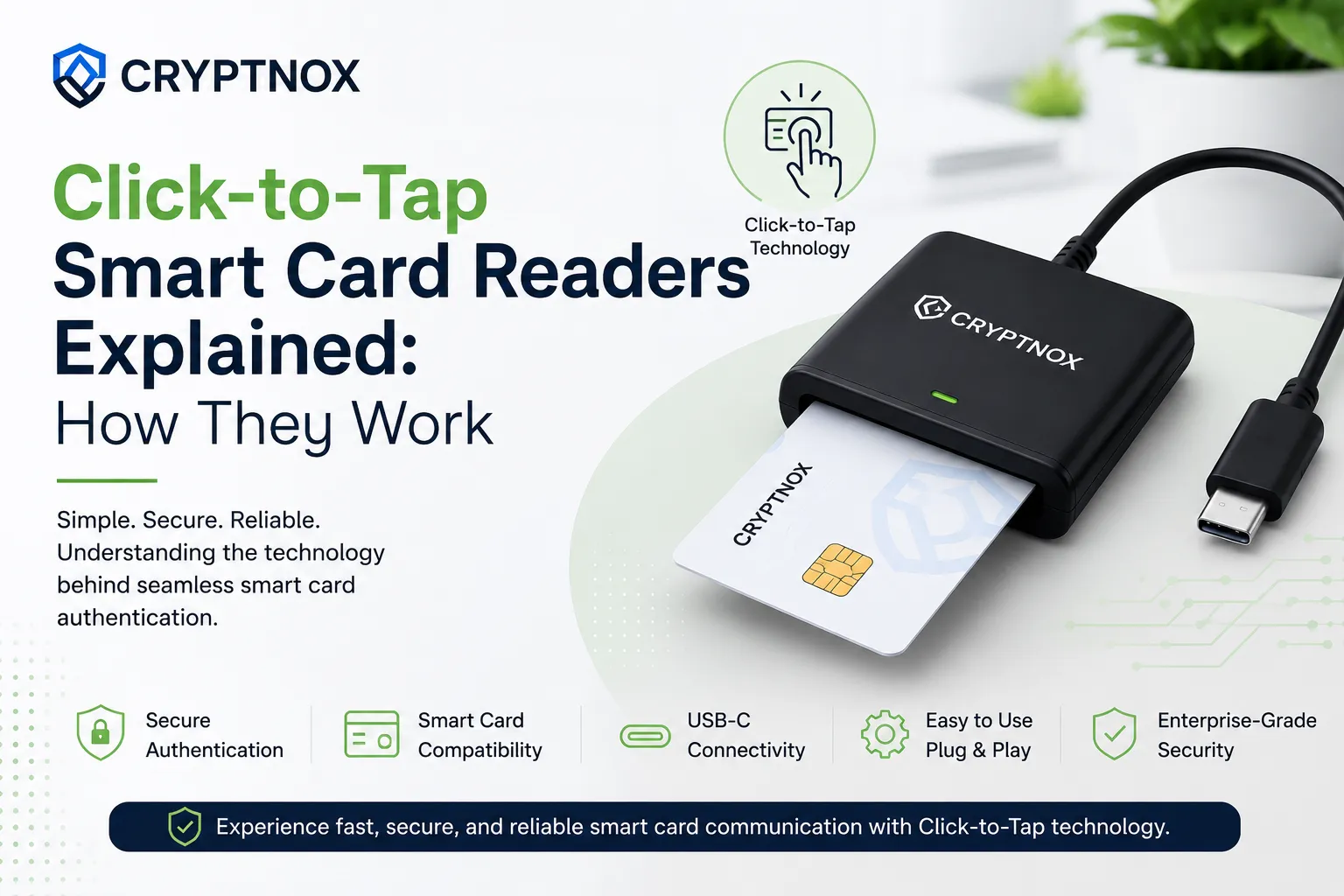
As organizations move toward passwordless authentication and stronger identity protection, smart card technology continues to play a vital role in securing digital access. Whether used in enterprise environments, government agencies, financial institutions, or healthcare organizations, smart cards provide a secure method of storing digital certificates and cryptographic credentials. However, these cards require reliable hardware to communicate with computers and authentication systems. This is where a Click-to-Tap smart card reader becomes an essential component of modern cybersecurity infrastructure.
Designed to simplify smart card interactions while maintaining high security standards, Click-to-Tap readers provide fast, secure communication between contact smart cards and desktop computers. Understanding how these readers work helps organizations choose the right authentication hardware for secure digital identity management.
What Is a Click-to-Tap Smart Card Reader?
A Click-to-Tap smart card reader is a hardware device that connects to a computer and enables secure communication with contact smart cards. Unlike traditional card readers that may require complicated installation or multiple interfaces, Click-to-Tap readers are designed for efficient, user-friendly authentication while maintaining enterprise-grade security.
These readers allow smart cards to perform cryptographic operations without exposing private keys or sensitive credentials to the host computer. Instead, authentication requests are securely processed within the smart card’s secure element.
A high-quality Click-to-Tap smart card reader supports secure authentication workflows while improving usability for employees and IT administrators alike.
How Does a Click-to-Tap Reader Work?
The authentication process begins when a user inserts a compatible smart card into the reader. Once connected, the operating system and authentication software establish secure communication with the smart card through standardized protocols.
The reader itself does not store credentials or perform authentication. Instead, it simply acts as a secure communication bridge between the computer and the smart card.
The typical workflow includes:
-
Connecting the reader via USB
-
Inserting the smart card
-
Establishing encrypted communication
-
Verifying certificates or credentials
-
Completing secure authentication
Because all cryptographic operations occur inside the smart card, sensitive private keys remain protected throughout the process.
Why Click-to-Tap Readers Improve Enterprise Security
Modern organizations face increasing cybersecurity threats, including phishing attacks, credential theft, and unauthorized system access. Hardware-based authentication significantly reduces these risks by eliminating reliance on passwords alone.
A Click-to-Tap reader supports secure desktop authentication by enabling cryptographic verification instead of password-based login.
Benefits include:
-
Strong identity verification
-
Protection against credential theft
-
Support for passwordless authentication
-
Secure certificate management
-
Reduced phishing risks
When combined with enterprise authentication systems, these readers strengthen organizational security while improving the user experience.
USB-C Connectivity for Modern Workstations
Today’s business environments increasingly rely on USB-C connectivity for laptops, workstations, and docking stations. Choosing a USB-C smart card reader ensures compatibility with modern hardware while simplifying deployment across enterprise environments.
USB-C readers offer several advantages:
-
Universal compatibility
-
Reliable connectivity
-
Easy installation
-
Compact design
-
Long-term hardware support
These features make USB-C readers particularly attractive for organizations planning future hardware upgrades.
Common Use Cases for Click-to-Tap Readers
Click-to-Tap readers are widely used across industries that require strong identity verification and secure access control.
Typical deployments include:
Enterprise Authentication
Employees securely authenticate to corporate networks using smart cards instead of passwords.
Government Agencies
Government organizations use smart cards for secure identity verification and controlled access to sensitive systems.
Financial Institutions
Banks rely on smart card authentication to protect confidential financial operations and customer information.
Healthcare
Medical professionals use smart cards to securely access electronic health records while meeting regulatory compliance requirements.
These diverse applications demonstrate the flexibility of modern smart card reader technology.
Choosing the Right Smart Card Reader
Selecting the appropriate reader involves more than simply choosing compatible hardware. Organizations should evaluate several important factors before deployment.
Look for readers that offer:
-
Support for ISO 7816 smart cards
-
Windows and Linux compatibility
-
Reliable USB-C connectivity
-
Enterprise-grade durability
-
Easy driver installation
-
Stable authentication performance
A dependable Cryptnox Click-to-Tap reader provides these capabilities while supporting modern enterprise authentication environments.
Supporting Desktop Smart Card Authentication
Desktop authentication remains one of the most common uses for smart card readers. Rather than entering passwords that can be compromised, users authenticate using cryptographic credentials stored securely on their smart cards.
Desktop smart card authentication provides:
-
Faster login experiences
-
Reduced password management
-
Strong cryptographic protection
-
Secure access to enterprise resources
-
Improved compliance with security policies
As organizations continue adopting Zero Trust security models, hardware authentication becomes an increasingly important component of identity management strategies.
The Future of Smart Card Readers
Authentication technology continues evolving as organizations embrace passwordless security, digital identity platforms, and stronger access control mechanisms.
Future smart card reader deployments are expected to support:
-
Enterprise identity platforms
-
Zero Trust architectures
-
Digital certificate management
-
Secure developer authentication
-
Government identity programs
-
Advanced PKI environments
By investing in high-quality smart card readers today, organizations prepare themselves for future authentication standards while reducing long-term infrastructure costs.
Conclusion
Click-to-Tap smart card readers provide the secure connection between physical smart cards and enterprise authentication systems. By enabling encrypted communication without exposing sensitive credentials, they help organizations strengthen identity verification while simplifying user access.
Whether supporting passwordless authentication, certificate management, or secure desktop login, a Click-to-Tap smart card reader offers the reliability and security required for modern enterprise environments. Solutions such as the Cryptnox Click-to-Tap reader combine robust hardware, USB-C connectivity, and enterprise-ready performance, making them an excellent choice for organizations building secure authentication infrastructures that are prepared for the future.
