


Mobile ML: The Competitive Advantage for Digital Enterprises
Key Takeaways
-
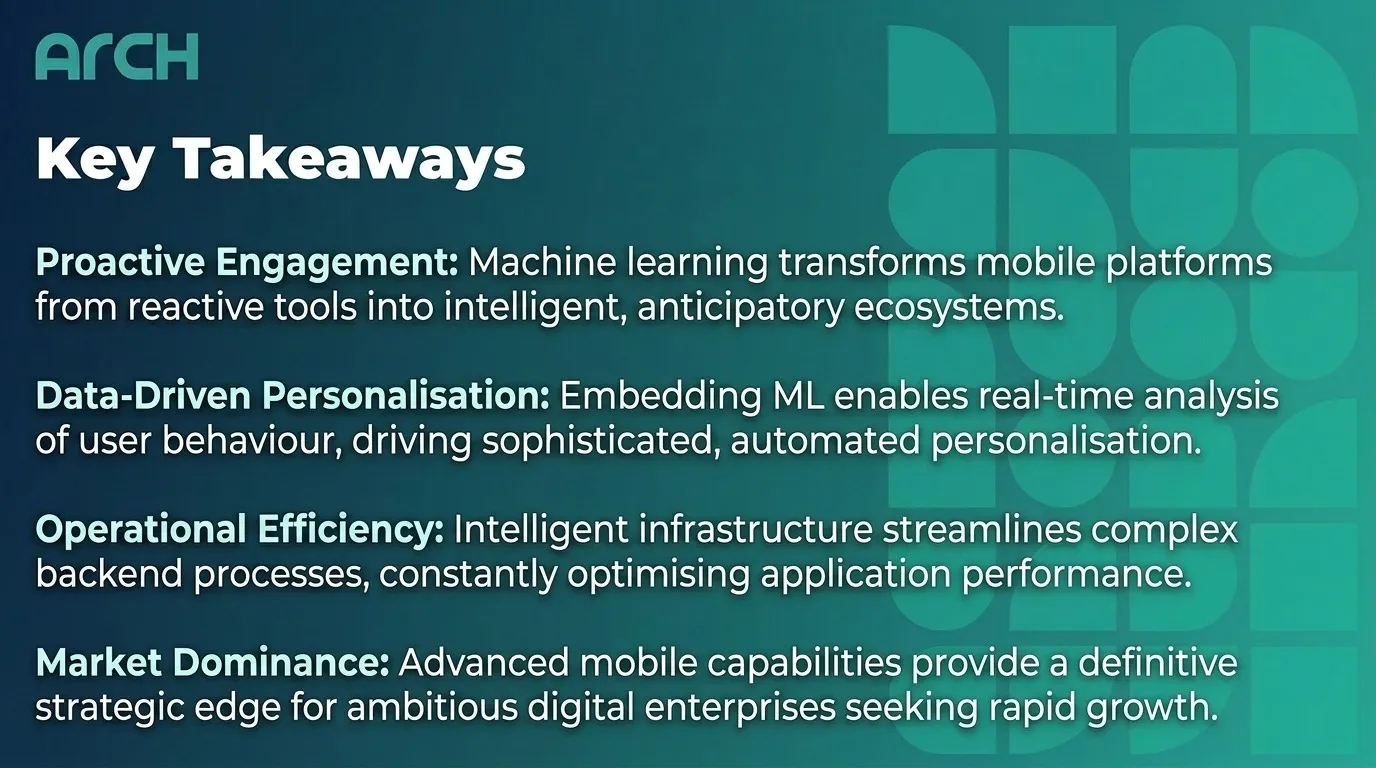
Proactive Engagement: Machine learning transforms mobile platforms from reactive tools into intelligent, anticipatory ecosystems.
-
Data-Driven Personalisation: Embedding ML enables real-time analysis of user behaviour, driving sophisticated, automated personalisation.
-
Operational Efficiency: Intelligent infrastructure streamlines complex backend processes, constantly optimising application performance.
-
Market Dominance: Advanced mobile capabilities provide a definitive strategic edge for ambitious digital enterprises seeking rapid growth.
The Strategic Imperative of Mobile Machine Learning
Emerging digital enterprises operate in an exceptionally crowded landscape where standard mobile experiences are no longer sufficient. To truly differentiate, ambitious brands must evolve their digital products from static interfaces into dynamic, anticipatory ecosystems. Integrating machine learning (ML) capabilities directly into mobile infrastructure provides this exact transformation.
Rather than simply reacting to user inputs, intelligent mobile infrastructure analyses real-time behaviour to predict needs and personalise journeys. This shift from reactive to proactive engagement is a foundational requirement for any organisation serious about market dominance. It establishes a sophisticated technological foundation that continuously optimises performance and drives strategic business growth.
By embedding machine learning at the core of their digital strategy, modern organisations can unlock unprecedented commercial value. This integration empowers brands to make data-driven decisions seamlessly, cementing their position as definitive industry leaders.
Transforming User Behaviour Through Data
The fundamental value of mobile machine learning lies in its capacity to transform vast amounts of raw data into actionable intelligence. Every interaction a user has with a mobile application generates highly specific behavioural data. When processed through embedded ML algorithms, this information reveals complex patterns that standard analytics tools simply cannot detect.
This granular understanding allows digital enterprises to deploy highly tailored content and features instantaneously. If an application can anticipate a user’s objective before they consciously register it, the friction within the customer journey drops significantly. Consequently, retention rates increase, and user lifetime value grows exponentially over time.
Moreover, leveraging on-device machine learning ensures that this complex data processing happens with remarkable speed and enhanced privacy. By analysing behaviour locally on the hardware, brands can offer hyper-personalised experiences without compromising sensitive consumer information.
Engineering the Intelligent Infrastructure
Achieving this level of technological sophistication requires more than basic API integrations; it demands a fundamental restructuring of the mobile architecture. The infrastructure must be explicitly designed to support continuous model training, secure data ingestion, and rapid deployment. This is where strategic technical execution separates market leaders from their competitors.
For emerging enterprises, collaborating with expert technical teams is a critical step in navigating this complexity. Securing the expertise of an elite app development company ensures that the foundational architecture is robust, scalable, and inherently intelligent. These specialist partners provide the rigorous engineering standards required by the world’s most ambitious brands.
Ultimately, the infrastructure must act as the central nervous system of the digital product. When machine learning capabilities are structurally woven into the application, the entire platform becomes self-optimising, highly resilient, and primed for extensive scaling.
Conclusion
Integrating machine learning into mobile infrastructure is no longer an experimental luxury for emerging digital enterprises. It is a strict operational mandate for those intending to lead their respective markets and drive sustainable business growth. By transforming passive data into predictive intelligence, brands can forge deeper, more lucrative relationships with their user base.
The technical complexities of embedding these advanced capabilities are significant, but the commercial rewards are undeniable. Organisations that successfully execute this structural integration will define the future standards of digital engagement. They will securely establish themselves as the sophisticated choice in an increasingly commoditised digital landscape.
Frequently Asked Questions
What is the main benefit of mobile machine learning?
The primary benefit is the ability to shift an application from a reactive state to a proactive one. By continually analysing user behaviour in real-time, the application can anticipate needs, which significantly enhances user retention and overall commercial value.
Why is on-device machine learning important for modern brands?
On-device processing allows algorithms to analyse behavioural data locally without constantly communicating with a central server. This massively reduces latency for real-time features and provides a highly robust layer of data privacy for the consumer.
How does intelligent infrastructure impact application scalability?
A machine-learning-enabled infrastructure is inherently designed to optimise its own performance and manage variable workloads efficiently. This ensures that as user bases grow, the core application remains exceptionally stable, fast, and capable of handling complex computational demands.
